
 RT-3
RT-3 Subtotal: $160.00



AOD-9604 (Fragment 176–191) 5mg is a high-purity, lab-tested research peptide developed as a modified fragment of human growth hormone (HGH). Unlike full-length HGH, AOD-9604 was specifically engineered to isolate and study the fat-regulating domain of the hormone while minimizing interaction with growth-related or glycemic pathways. This targeted design makes it a valuable compound in metabolic and adipose tissue research, particularly for studies focused on lipid metabolism and energy balance.
In laboratory and preclinical models, AOD-9604 is commonly examined for its potential role in stimulating lipolysis—the breakdown of stored fat—while simultaneously inhibiting lipogenesis, the formation of new fat. Researchers are especially interested in how this peptide may influence fat metabolism without significantly impacting insulin signaling, blood glucose levels, or systemic growth processes. These characteristics allow scientists to explore more selective metabolic mechanisms compared to broader-acting growth hormone compounds.
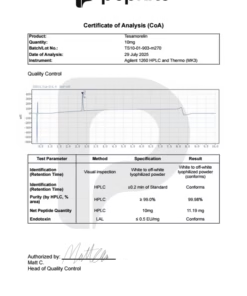
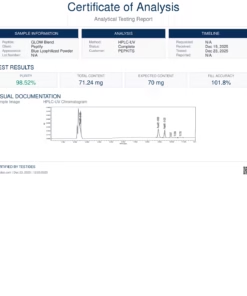
With a verified purity of ≥98%, AOD-9604 is manufactured under strict quality control standards to support consistency, stability, and reproducibility in research applications. High purity is essential for minimizing experimental variability and ensuring accurate interpretation of metabolic outcomes. This peptide is often utilized in controlled studies involving obesity models, metabolic efficiency, and body composition regulation.
After reconstitution, refrigeration is required to maintain peptide stability and preserve its biological integrity over time. Proper storage and handling are critical for ensuring reliable results across repeated experiments. AOD-9604 (Fragment 176–191) is intended strictly for research purposes only and is not approved for human use or consumption.
By allowing focused investigation into fat metabolism without broader endocrine effects, AOD-9604 continues to be an important research tool for advancing scientific understanding of targeted metabolic regulation and the development of next-generation metabolic research strategies.








Reviews
There are no reviews yet.